
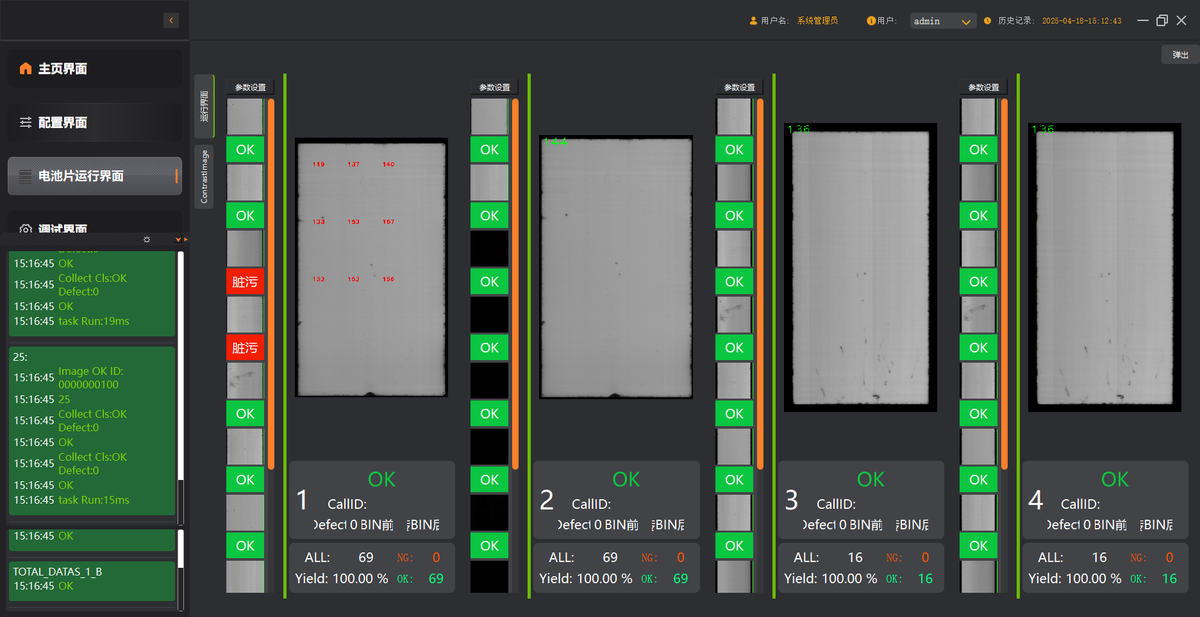
Why EL inspection needs an end-to-end software workflow
An EL image becomes useful production evidence only when acquisition, image preparation, recognition, rule evaluation, sorting, and quality records remain connected. This end-to-end structure lets engineers trace a final signal back to the relevant image and decision context. It also keeps defect recognition separate from the production action that follows, making review responsibilities easier to define.
Start with stable, comparable image inputs
Comparable inputs begin with controlled acquisition and a stable inspection region. Alignment and cropping establish where analysis should occur, while illumination and grayscale checks reveal changes in the image baseline before inference. Treating these checks as part of the workflow helps teams distinguish imaging variation from defect evidence and creates a clear reason to revalidate after a product or optical change.
Separate model recognition from production rules
Deep learning can recognize complex EL patterns, but it should not carry every production decision. Recipes, grayscale conditions, region filters, and defect aggregation express the explicit boundaries that the line must follow. Keeping these responsibilities distinct makes the workflow easier to review: model output describes evidence, while verified rules determine how that evidence contributes to a production result.
Connect defect results to PLC, BIN, and MES logic
Production systems need structured outcomes rather than an isolated model label. The inspection workflow can aggregate defect classes and locations, translate verified decisions into BIN or sorting signals, and connect those outcomes with PLC and MES quality processes. The public engineering pattern is the relationship among states, decisions, and records; device-specific configuration remains a line validation matter.
Use statistics, alarms, and logs for reviewability
Statistics, alarms, retained images, and logs give different views of the same inspection process. Statistics expose distributions and changes, alarms direct attention to exceptions, and image or log records support later review of a batch and its decision. Consistent identifiers across inspection and sorting records are therefore essential for evidence to remain useful beyond the moment of detection.
Validation boundaries before deployment
Before deployment, thresholds, model versions, filter regions, image retention, and sorting mappings all require product- and line-specific validation. Imaging conditions, recipes, and production interfaces can change the meaning of a decision even when the software workflow stays the same. Teams should recheck image baselines, rule boundaries, record handling, and destination signals whenever those operating conditions change.