
New Energy Manufacturing · Multi-process Vision
New Energy Vision Inspection
Switch between string EL, busbar welding AOI, module EL/AOI, and integrated inspection data, with real equipment scope and published projects for each production stage.
- 04
- Inspection stages
- 03
- Related published projects
- 01
- Verified technical document
Production stage
Select an inspection solution by production stage
Review one stage at a time. The image, published metrics, inspection scope, and project evidence update together.Inspection point · Module inspection
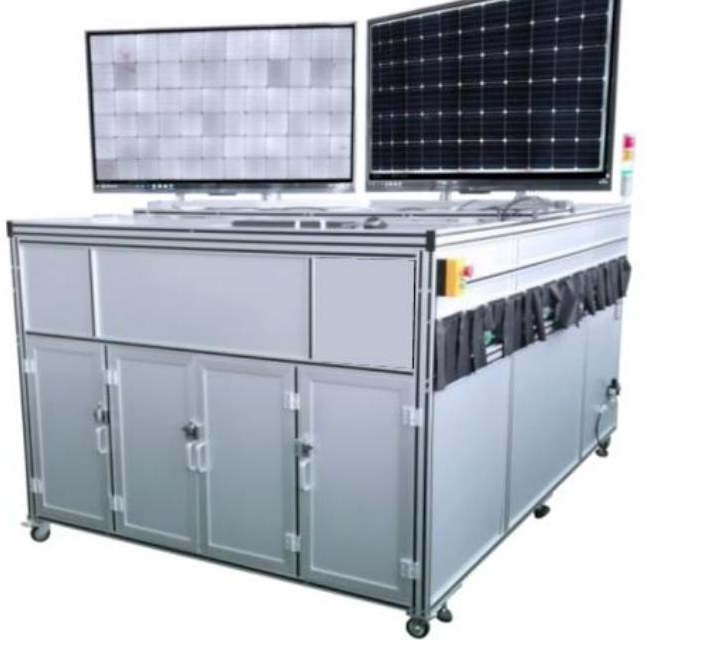
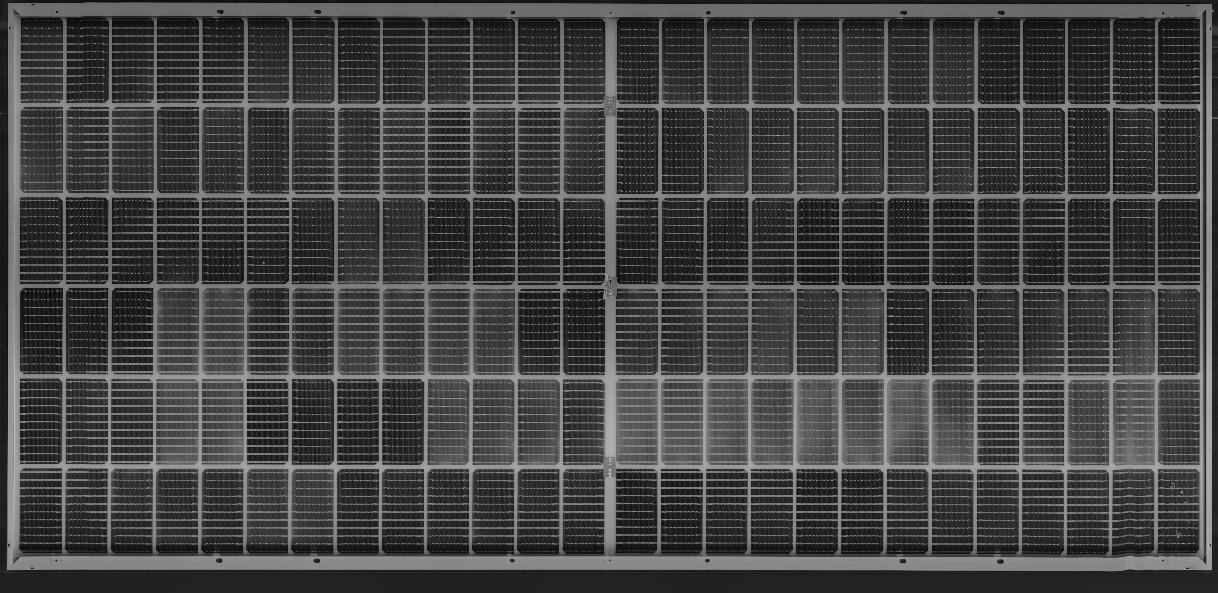
Module EL / AOI
EL and AOI can share one station or run independently after bussing or edge trimming, covering internal electrical defects and front/rear appearance.
Solution basis
- 0.35 mm/px
- EL resolution
- 12
- Focus points
- < 11 s
- AOI cycle time
- 2 + 1
- Front / rear 8K
These are source-defined standard configurations or targets. Final scope is confirmed through sample testing and the technical agreement.
Inspection and integration scope
- Process contamination, material defects, cracks, fragments, and broken fingers
- Missing solder, low-efficiency cells, brightness anomalies, and appearance defects
- Twelve-focus HD imaging with three-stage acquisition
- Fast changeover, barcode reading, MES upload, and yield statistics
Featured technical detailPV Module Front & Rear Appearance InspectionThe verified featured solution below includes equipment configuration, workflow, and data-integration detail.Open full detailClose full detail
Overview
Quantified, traceable appearance decisions during module production
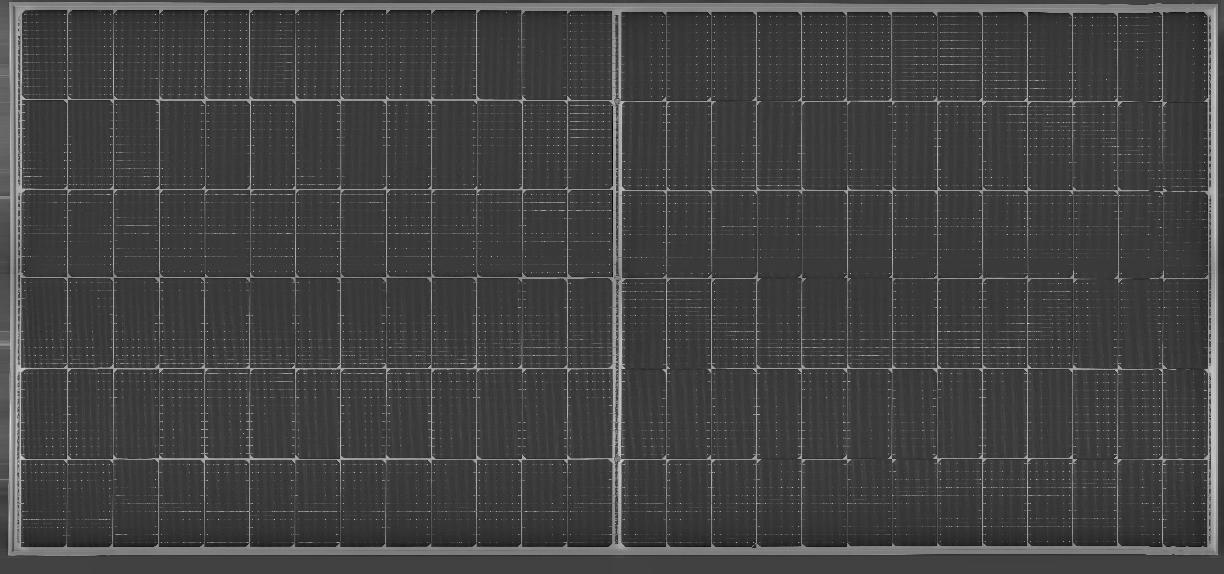
The unit can be installed after string welding or edge trimming and uses short-edge transport. A single line scan is captured while the module moves, preserving true cell and string spacing without image stitching.
AI and rule-based vision work together to identify fixed visual defects, positional offsets, and dimensional distances. Results can be linked to barcodes, recipes, shifts, and MES records.
Inspection scope
Critical front and rear appearance checks from cells to busbars
Thresholds for defect type, contrast, length, area, quantity, and position can be configured and stored by module recipe.
- Stains, scratches, bubbles, and foreign material
- Edge chips, missing corners, fragments, and cracks
- Ribbon offset and busbar position anomalies
- Cell gap, string gap, and safety distance
- Single- or double-sided appearance and nameplate images
- Optional NG-cell grid positioning
In-line workflow
Capture, decide, and return data in one pass
The inspection chain follows the existing conveyor takt and supports centralized one-to-many control.- 01Code & recipe
Read the module ID and load the matching product recipe.
- 02Dual-side scan
Two front and one rear 8K line-scan cameras capture the module.
- 03Detect & measure
AI networks and rules classify defects and measure distances.
- 04Locate results
Return defect type, location, dimensions, and NG cell grid.
- 05MES & reports
Upload results and export shift and yield statistics.
Equipment
Embedded front and rear line-scan module
The compact structure fits between existing conveyors; final configuration follows format range and cycle-time needs.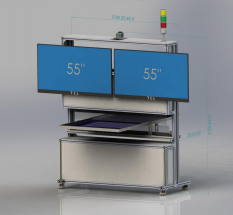
Module appearance line-scan unit
The standard proposal uses three 8K line-scan cameras with short-edge transport, automatic code reading, MES upload, and one-touch format switching.
| Camera setup | Front 2 × 8K; rear 1 × 8K |
|---|---|
| Cell range | 156 × 156 mm - 220 × 220 mm |
| Module size | L 1650 - 2550 mm; W 900 - 1450 mm |
| Formats | Full / half cell, 5BB / 6BB / 9BB / MBB |
| Defect decision | ≤ 5 s |
| Length measurement error | ≤ ±0.2 mm |
| Specified miss rate | < 0.05% |
| Specified overkill rate | < 5% |
- Supports single-glass, double-glass, and multiple junction-box formats.
- Single-pass line scan without stitching; dimensional thresholds are recipe based.
- A trained AI network can be imported for the same module format.
Software & integration
Inspection results become production data
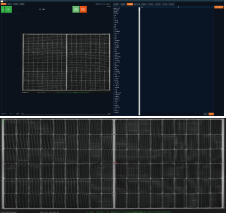
The interface consolidates module images, defect locations, and decisions, with barcode reading, MES upload, recipe management, and shift/yield statistics.
- Automatic format recognition and recipe switching
- Adjustable defect type, dimensions, quantity, and position
- Barcode-linked results and MES upload
- Shift statistics, yield reports, and result export
- Centralized one-to-many equipment control
Technical basis
- PV Module Front & Rear Appearance Inspection Module Introduction
- Zhongzhi Tuyou Product Brochure
These are standard configurations and targets stated in the supplied solution documents. Final configuration, inspection limits, and performance are confirmed against module formats, defect samples, line interfaces, and the technical agreement.
Send us your module format, defect samples, and takt time
Our engineers will confirm imaging, installation space, inspection limits, and line interfaces.